Project Overview
The international legal and political challenges of disinformation and artificial intelligence (Disinfor-AI)
What is it about?
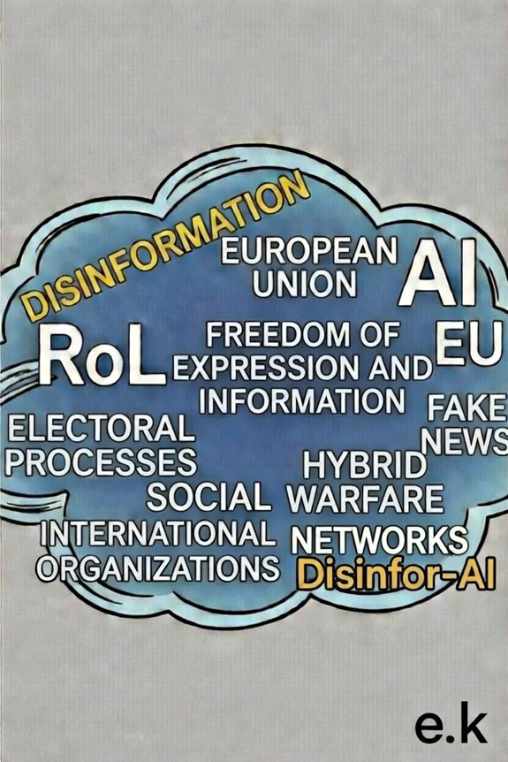
On the geostrategic level, disinformation has always played an important role. However, the ecosystem of free social media, as it exists in democratic countries, provides the ideal breeding ground for the spread of hoaxes and disinformation targeted at a population classified with precise knowledge of their political tendencies, consumption habits, and even emotional weaknesses, thanks to their digital footprint. In this context, autocratic powers enjoy a significant advantage compared to the EU Member States, as they have an experienced state apparatus skilled in information manipulation for years.
European countries must equip themselves with sophisticated social and regulatory instruments to defend their political and social systems against disinformation, while respecting freedom of the press and freedom of expression. This research project intends to present proposals to articulate an effective and feasible international and European regulation of Big Techs and the media (both areas of activity are increasingly integrated), both of state and private ownership, to combat disinformation.
What are our specific objectives?
The main goals we are dealing with are:
1. Disinformation as a major social problem:
- Disinformation, AI, social cohesion, and the Rule of Law.
- Human rights, the right to freedom of expression, and freedom of information as limits to initiatives against disinformation.
2. Disinformation from a geostrategic perspective:
- Disinformation and AI as instruments of hybrid warfare between major powers.
- Disinformation and electoral processes, especially in the European Union.
3. The role of international and European law in the fight against disinformation:
Drafting regulatory proposals for the improvement of tools to combat disinformation at the European and International levels.
- The policies of the EU.
- International cooperation against disinformation.
What are we doing and who are we partnering with?
We have established cooperation with Equipo Europa to investigate the most effective techniques and policies to combat disinformation. We have also contacted Maldita.es to take advantage of their experience as a trusted fact-checking agency in the EU that may enhance the social impact of our research. The internationalization of the team and its connection with other academic and practical fields is promoted by the inclusion of Professor Baade from the Freie Universität Berlin, a relevant specialist in the subject, as well as Dr. Alarcón-Jiménez, an official of the Council of Europe (CoE) and executive secretary of the MEDICRIME Convention, with extensive experience in electoral processes. The outreach of our activities is also fostered by our collaboration with the Euro-Arab Foundation for Higher Studies (FUNDEA) of the University of Granada. Its Secretary General, Prof. Sánchez-Ortega, is part of our research team. FUNDEA is a member of the EU consortium ‘Knowledge Hub on Prevention of Radicalisation’, which brings together practitioners, policy makers and researchers working on prevention across Europe and in priority third countries. In parallel, the member of the working team, Prof. Ruiz-Díaz, is Secretary of the Joint Center UGR-Army Training and Doctrine Command (MADOC), and this MADOC will allow us the development of practical communication activities carried out with military personnel, as regards the use of Disinformation and AI as instruments of hybrid warfare.